Start with your undertone
A lot of advice for dark skin treats it as one category. It is not. A deep complexion with a golden-red warmth and one with a blue-red or plum quality look best in different versions of the same colors. Some signs to look for:
- Warm deep skin has golden, red-orange or bronze warmth. Gold jewelry tends to glow, and brown or coral clothing looks rich.
- Cool deep skin has a blue-red, plum or rosy quality. Silver and platinum look clean, and fuchsia or royal blue look natural.
- Neutral deep skin wears both metals easily and has neither a clear golden nor a clear rosy lean.
- Olive deep skin has a muted, slightly green or gray cast, often noticed when foundation looks ashy.
The sun and vein questions are less useful for deep skin, which is why the undertone test lets you skip them. A skipped question adds no points either way, so your result rests on your other answers, such as metals, fabrics and foundation.
Colors that tend to look great on deep skin
Saturated jewel tones
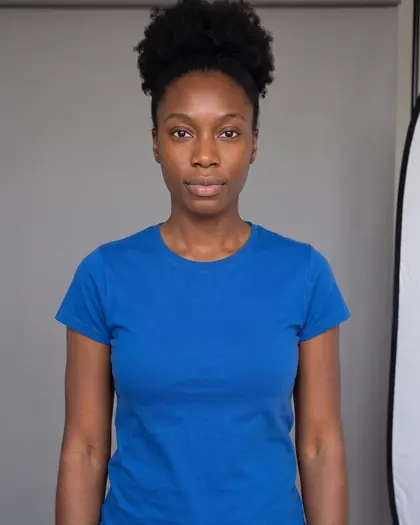
Deep skin can carry real color strength without being overpowered: emerald, royal blue, violet, ruby, teal. In our draping mirror, cobalt gave the deep, warm sitter the crispest look of the four colors.
Clear, warm brights
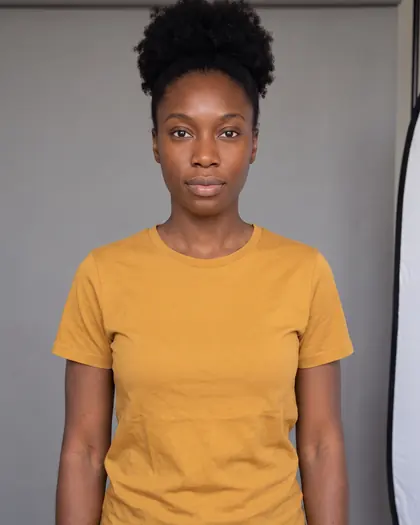
For warm deep skin especially: marigold, saffron, flame orange, hot coral and cardinal red. In the mirror, mustard brought the warmth in her skin forward, and her cheeks and forehead looked glowing.
Bright white
Bright white against deep skin is one of the strongest contrasts there is, and it usually looks clean and sharp. If optic white feels stark, try soft white rather than cream, which can blend more.
Pastels, chosen with care
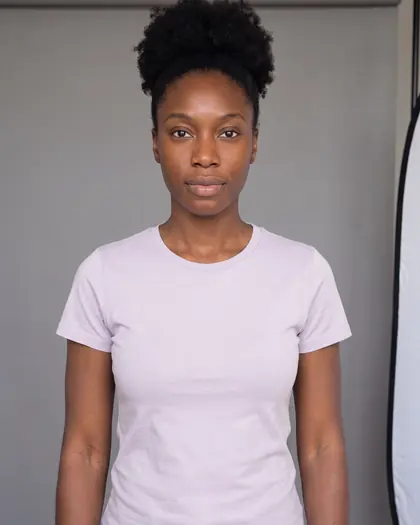
Clear pastels such as icy blue, mint, or a clean pale pink can look striking on deep skin because of the contrast. Pastels with a lot of gray in them are harder: next to a dusty, cool pastel, deep skin can look slightly cooler and flatter. That is close to what we saw with pale lilac in the mirror: a strong contrast, but her skin read a little cooler at the cheeks than with mustard or cobalt. Warm deep skin usually does better with warm pastels like peach or butter yellow; cool deep skin with icy pinks and blues.
The palette by undertone
| Undertone | Colors to start with | Metals |
|---|---|---|
| Warm deep | marigold, orange, kelly green, deep teal, cardinal red | Yellow gold, bronze, copper |
| Cool deep | royal blue, fuchsia, emerald, ruby, icy blue | Silver, platinum, white gold |
| Neutral deep | teal, true red, cobalt, magenta, golden ochre | Both, rose gold |
| Olive deep | emerald, peacock, wine, magenta, saffron | Antique gold, brass |
Full palettes for each undertone are in the guides for warm, cool, neutral and olive undertones.
Browns, black and tonal dressing
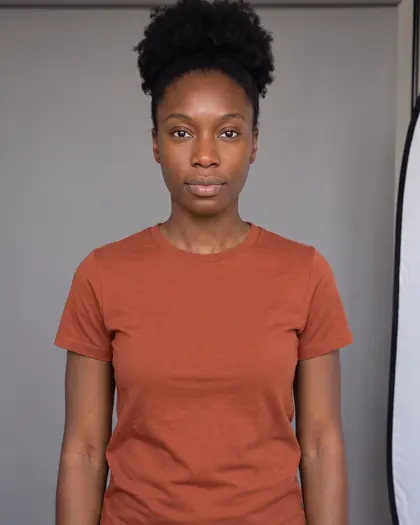
Browns and dark neutrals close to your own depth, such as chocolate, espresso or rust, create a soft, tonal look rather than contrast. In the mirror, rust read rich and tonal on the deep, warm sitter: face and neckline blended rather than contrasted. That is a choice, not a mistake. Tonal outfits look polished; add a lighter or brighter accent near the face (a white shirt collar, gold earrings, a bright scarf) when you want your face to stand out from the clothes.
Black works on deep skin and can look very elegant. When black at the neck feels heavy, the usual fix is the same: a contrast element near the face, or a deep jewel tone like navy, aubergine or forest green in place of black.
Fabric and finish
Texture changes how a color reads. Satin and silk reflect light onto the skin, which tends to make deep skin look luminous in jewel tones. Matte, chalky fabrics in pale colors can look flatter. If a pastel looks wrong in cotton, try it in a silk or a knit with some sheen before ruling it out.
Photographing deep skin in color
If you judge colors from photos, light matters more than usual. Phone cameras and warm indoor bulbs can push deep skin too orange or too gray, which distorts every color next to it. Compare outfits near a window in daylight, from the same spot, and look at the photos side by side.
Check it on yourself
Pick two versions of a color, one warm and one cool, such as marigold and fuchsia, or coral and royal blue. Hold each under your chin in daylight. The one that makes your skin look more even and alive is your direction; the palette-by-undertone table in this guide shows where to go from there.
See a color on your own photo
Shopping for something in this palette? Upload a photo of yourself and a photo or shop link of the garment. FitInView creates a try-on image of you wearing it, so you can compare it with the version you are unsure about.
Try it on your own photoCreate a free account
Your first try-on is included with a free account. No card needed. Your photos are private to your account, and you can delete them.