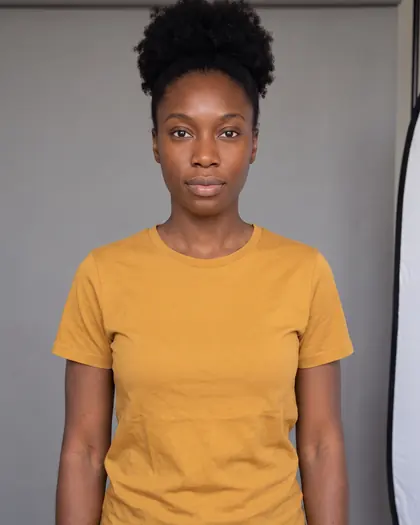
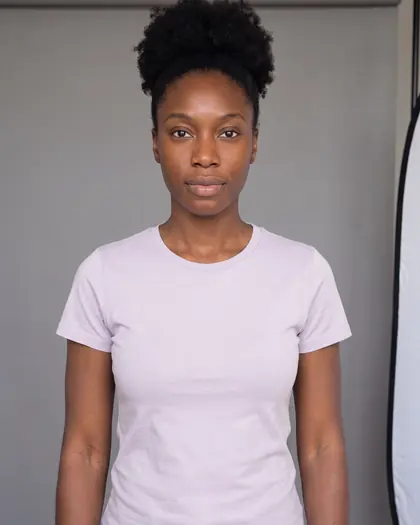
Signs you have a warm undertone
Most people with warm undertones recognize several of these, though rarely all of them:
- Yellow gold looks better on your skin than silver.
- Cream or ivory looks softer near your face than bright white.
- The veins on your wrist look more green than blue in daylight.
- You tan golden or bronze rather than burning pink.
- Golden or yellow-based foundation matches you best.
One sign alone proves little. If you are unsure, the undertone test weighs seven clues and tells you how clear your lean is.
The warm palette, by skin depth
Warmth is about the direction of a color, not how light or dark it is. What changes with depth is how much contrast and saturation look natural on you.
Fair and light warm skin
Light, clear warm colors tend to look fresh: peach, warm coral, butter yellow, clear turquoise and honey. Very heavy, dark colors such as deep brown or rust can overpower fair warm skin when worn as a big block at the neck; they work better further from the face or with a lighter layer on top.
Medium and tan warm skin
This is the range most warm-palette advice is written for: terracotta, mustard, olive green, burnt orange, brick red and warm teal. Earthy, slightly muted shades tend to look rich rather than dull here.
Deep warm skin
Deep warm skin can carry real saturation. Marigold, flame orange, cardinal red, kelly green and hot coral make strong, pleasing contrast. In our draping mirror, mustard made the deep, warm sitter's skin look the most glowing of the four colors, to our eyes. See the guide to colors for dark skin for more on contrast at this depth.
Reds, greens and blues: pick the warm version
Almost every color comes in a warmer and a cooler version. You do not need to give up a color family, only choose the side of it that leans yellow.
| Family | Warm version, usually easier | Cool version, test first |
|---|---|---|
| Red | tomato, brick, coral | raspberry, blue-red |
| Pink | salmon, peach-pink | fuchsia, icy pink |
| Green | olive, moss, kelly | pine, blue-green |
| Blue | teal, turquoise, warm navy | icy blue, periwinkle |
| Purple | warm plum, aubergine with a red cast | lavender, lilac |
| Yellow | marigold, mustard, saffron | lemon, acid yellow |
Neutrals for warm undertones
Neutrals do most of the work in a wardrobe, so they matter more than accent colors. With a warm undertone, the easy ones are cream and ivory instead of optic white, camel, chocolate brown, olive drab and a navy with a slight warm cast.
Black is the usual question. Next to the face it can look heavy on fair or light warm skin, and fine on deeper skin. If you love black, wear it as trousers, skirts or outerwear, or break it at the neck with a cream collar, a gold necklace or a warm scarf.
Colors to test before you buy
These often look less comfortable near warm skin. They are not banned; just try them in daylight before committing:
- Icy pastels such as ice blue and icy pink. Their gray-blue base can make golden skin look a little sallow.
- Blue-based fuchsia and magenta. A coral or warm pink usually gives the same energy with less clash.
- Cool ash gray. Warm grays with a beige or taupe tint tend to be easier.
- Optic white on fair or light warm skin, where it can look stark. On deep warm skin, bright white often looks great.
Metals, glasses and accessories
Yellow gold, brass, bronze and copper usually look most at home with warm skin. Tortoiseshell and honey-colored frames are the warm choice for glasses; brown leather in cognac or tan beats black for bags and belts if you want the whole look to stay in one temperature. Rose gold sits in the middle, which makes it an easy gift when you don’t know someone’s undertone.
Warm is not one look
Seasonal color systems split warm undertones into a lighter, clearer group (often called spring) and a deeper, more muted group (often called autumn). You do not need the labels to use the idea. If bright, clean colors such as coral and turquoise make you look awake, lean clear. If earthy colors such as rust, olive and camel look better, lean muted. Your skin depth, hair and eye color all play into which side suits you.
Check it on yourself
The quickest way to test a warm palette is to hold two versions of one color under your chin: a coral and a raspberry, a teal and an icy blue. Do it in daylight and look at your skin, not the fabric. If the warm version wins most pairs, the warm palette in this guide is a good place to start.
See a color on your own photo
Shopping for something in this palette? Upload a photo of yourself and a photo or shop link of the garment. FitInView creates a try-on image of you wearing it, so you can compare it with the version you are unsure about.
Try it on your own photoCreate a free account
Your first try-on is included with a free account. No card needed. Your photos are private to your account, and you can delete them.